
Recording Testimony and Teaching Content for Churches and Nonprofits
Churches and nonprofits record three things in a studio: teaching content that is not tied to a service, testimony and interview pieces, and short explanatory video for giving or volunteer campaigns. The studio matters most for testimony, because a quiet room with one person's full attention on the recording produces something a phone in a hallway does not. At Kreate Vision Studio in Palatine, Illinois a four-hour block at $1,000 realistically produces a term of short teaching pieces, and The Hearth is usually the right set because it reads as unguarded rather than institutional.
The organisations already publishing weekly
Churches and nonprofits were publishing video on a weekly schedule long before most businesses considered it, and they are still among the few that manage it consistently. The habit is already there. What is usually missing is a format that is not just a camera at the back of a room.
There are three things worth taking into a studio, and one that should stay where it is.
What works in a studio
Teaching content that is not tied to a service. A short series explaining something properly, recorded once, used for years. This is the highest-return thing most organisations are not doing, because it is the only content with a shelf life longer than a week.
Testimony and interviews. One person, talking about something that mattered. This is the format where the room makes the biggest difference and where it is most often skipped in favour of a phone in a hallway after a service.
Short explanatory pieces for campaigns. Giving, volunteering, a building project, a new programme. Ninety seconds explaining what the money or the time does, made once and used across every channel.
What should not come to a studio
Anything whose point is that it happened in your building.
The service itself. The congregation. Volunteers doing the work. A studio set is the wrong backdrop for content whose credibility comes from the place, and putting it on one actively weakens it. Film that where it happens.
Why testimony is harder than teaching
Teaching is a performance somebody has already given a version of. Testimony is not.
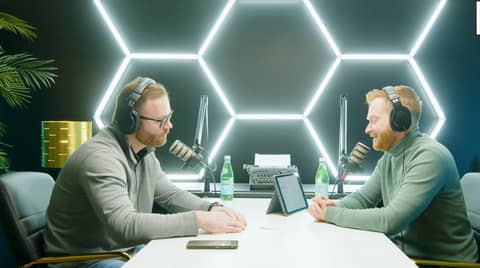
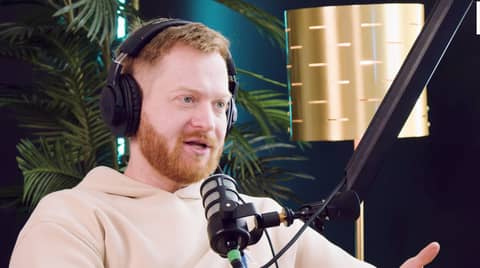
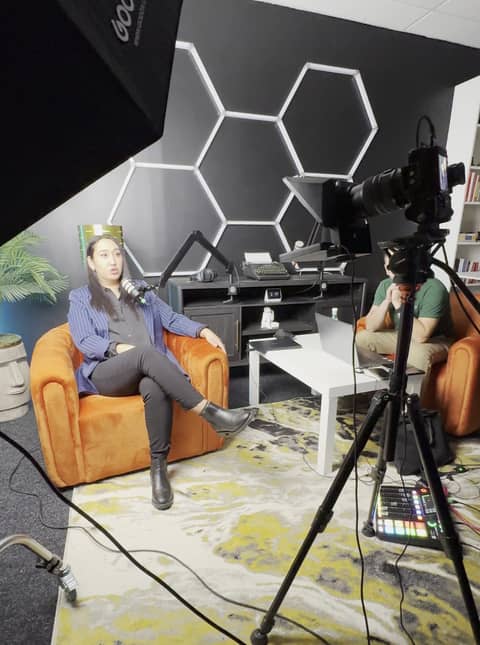
People telling a personal story need three things a hallway does not provide: quiet, time, and the sense that somebody is listening. In a studio the room is silent, nobody is walking past, and an engineer is handling everything technical so the person interviewing can just listen.
Practical notes from doing these:
- Allow more time than the runtime suggests. A six-minute finished piece usually needs forty-five minutes in the room. The first fifteen are the person deciding whether they trust the situation.
- Have one interviewer, not a committee. An audience of colleagues changes what people say.
- Ask the question, then stop talking. The most useful material almost always arrives after a silence somebody was tempted to fill.
- Agree in advance what is off limits. Then everyone relaxes, including the person asking.
A term of content in one visit
A four-hour block realistically produces a term’s worth of short teaching pieces, if they are planned before the day. The planning is the constraint, not the recording.
The schedule that works: write the list, cut it by a third, script the opening line of each, and record them in order of how confident you feel. By the fourth you will be noticeably better than you were on the first, which is an argument for putting the most important one fifth rather than first.
Change set between pieces and change shirt at the halfway point, or a term of content released weekly will visibly be one afternoon in autumn.
Which set
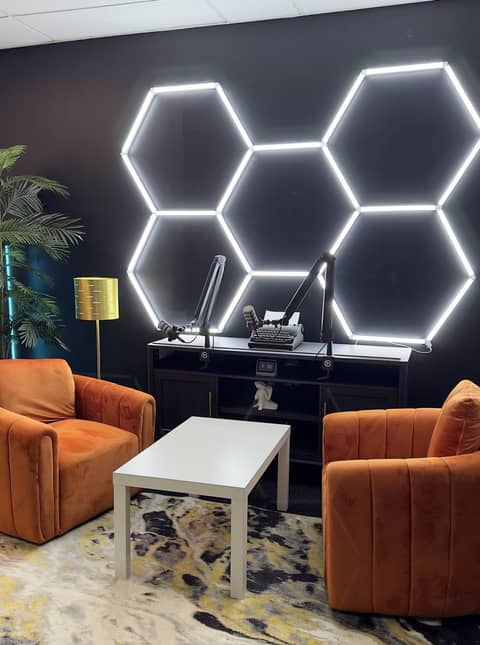
The Hearth for testimony and conversation. Brown chairs and a fireplace, which reads as warm and unguarded rather than official.
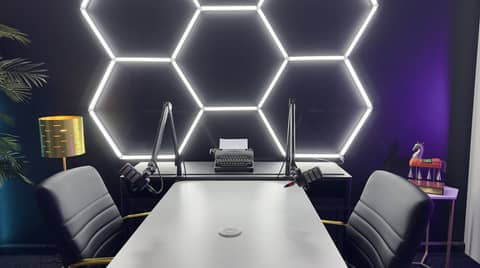
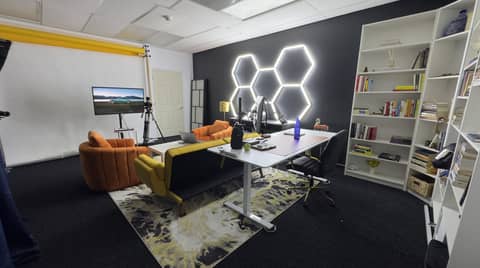
The Library for teaching. Floor-to-ceiling bookcase, which reads as considered without looking institutional or corporate.
Both avoid the trap of a set that looks more polished than the organisation actually is, which undermines the thing you are trying to build.
The budget question
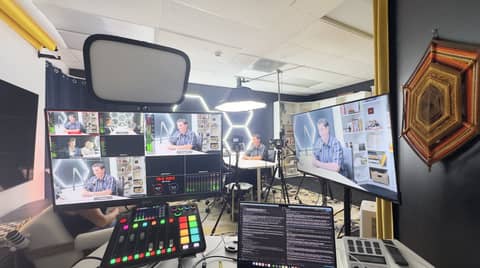
A four-hour block is $1,000, which includes the room, three cameras, an engineer, a live multi-camera cut delivered the same day, and every raw file. No separate crew day rate, and no per-camera charge. For an organisation producing a term of content in one visit, that is the production cost of the term.
Editing beyond the live cut, captions and clip packages are quoted separately and listed on the pricing page.
Also worth reading
How to batch a season in one day covers the scheduling. Choosing a set covers all five rooms.
Coming to see it
The studio is at 800 E Northwest Hwy Ste 90 in Palatine, open daily 9am to 8pm. Book through Square Appointments or call (224) 328-2853. If it would help to see the rooms before committing a term’s content to them, a 15-minute tour is bookable online.
What do churches usually record in a studio rather than in the building?
Teaching content that is not tied to a specific service, testimony and interview pieces, and short explanatory video for giving or volunteer campaigns. Anything that needs to look like the building should be filmed in the building.
Why record testimony in a studio?
Because a quiet room where one person has everyone's full attention produces something a phone in a hallway does not. Testimony is the format where the room makes the biggest difference and where it is most often skipped.
How much can we record in one visit?
A four-hour block at $1,000 realistically produces a term's worth of short teaching pieces if they are planned in advance, or several testimony interviews with time to let people settle.
Which set suits this kind of content?
The Hearth for testimony and conversation, because it reads as warm and unguarded. The Library for teaching, because it reads as considered without looking institutional.
Do we need someone from our team to run the recording?
No. An on-site engineer runs cameras and audio on every booking, so whoever is leading the conversation only has to lead the conversation.