
Podcast Studio Cost in the Chicago Suburbs: The Full Rate Card
Recording a podcast at Kreate Vision Studio in Palatine, Illinois costs $250 per hour with a 90-minute minimum, so the smallest bookable session is $375. That covers three 4K cameras, an on-site engineer, a live multi-camera cut delivered the same day, and separate raw audio tracks. Longer blocks cost less per hour: six hours is $1,400 and eight hours is $1,800. Post-production beyond the live cut, short-form clips, captions and distribution setup are quoted separately.
The hourly rate is the number everyone asks for and the one that tells you least
Ask what a podcast studio costs and you will get an hourly rate. It is the wrong question, or at least an incomplete one, because two studios quoting the same rate can cost very different amounts for the same recording.
What actually determines the bill is three things: the rate, the minimum block you have to buy, and how much of the finished product is included before you start paying for post-production.
The real cost of one session
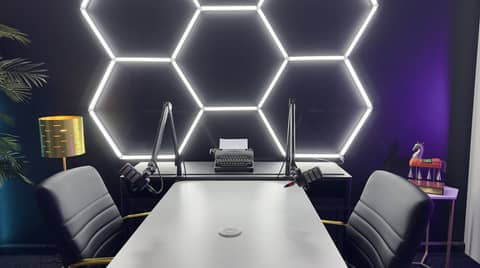
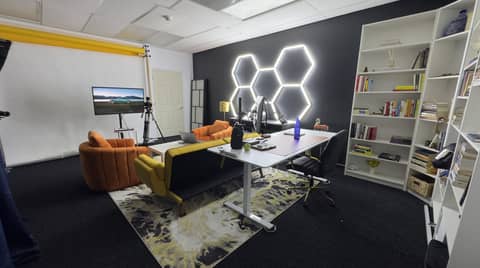
Here is the full table for the podcast room at Kreate Vision Studio in Palatine. These are the live Square booking prices, not an estimate.
| Block | Price | Works out at |
|---|---|---|
| 1 hr 30 min (minimum) | $375 | $250/hr |
| 2 hours | $500 | $250/hr |
| 3 hours | $750 | $250/hr |
| 4 hours | $1,000 | $250/hr |
| 6 hours | $1,400 | $233/hr |
| 8 hours | $1,800 | $225/hr |
The smallest session you can book is 90 minutes at $375. The same table, plus the Content Session rates and the quoted add-ons, is on the pricing page. That is the honest floor, and it is worth saying plainly rather than advertising $250 and letting you discover the minimum at checkout.
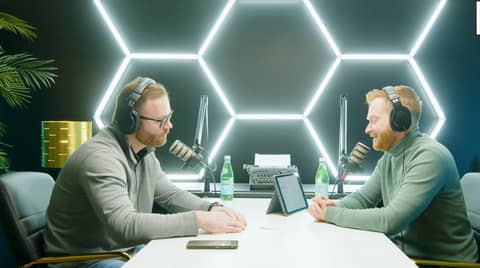
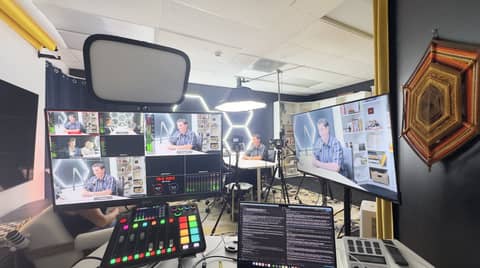
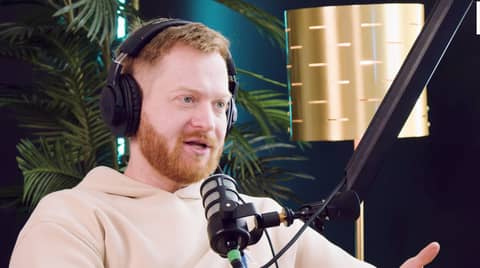
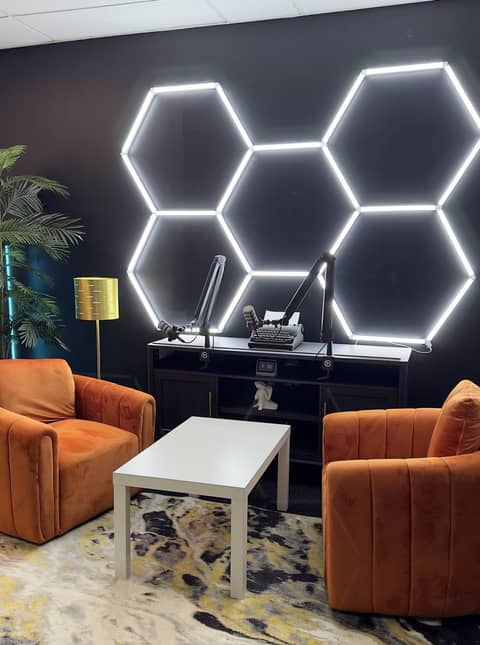
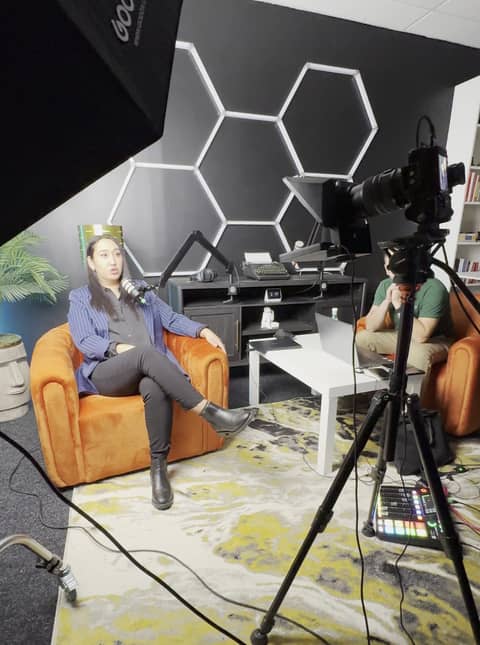
Every one of those blocks includes three 4K cameras, an on-site engineer running the session, a live multi-camera cut, and separate raw audio tracks handed over afterwards. Nothing on that list is an upgrade or an add-on. Kreate Vision Studio is rated 5.0 on Google.
Why there is a minimum at all
Because the fixed work does not scale down. Before anyone sits at the table the room has to be set for the format, lit, mic’d, and levelled. Afterwards it has to be struck and the files handled. That is real time whether you record for 40 minutes or four hours.
A studio can deal with that in one of two ways. It can quote a high hourly rate and let short bookings subsidise the setup, or it can quote a straight rate with a minimum block that covers it. The second is less flattering in an ad and more honest at the invoice.
The costs people forget to budget for
Studio time gets you the recording. It does not get you a finished, published show. The gap between those two things is where most first-time budgets go wrong.
- Post beyond the live cut. The live multi-camera cut is done by the time you stand up, and for a lot of shows that is enough to publish. A more produced edit with graphics, music and tightened pacing is separate work.
- Short-form clips. The vertical clips that actually distribute the episode are their own job. Nobody gets ten usable clips as a byproduct of recording.
- Captions and transcripts. Needed for accessibility, for search, and increasingly for being quoted by AI answer engines that read transcripts rather than watch video.
- Distribution setup. A one-time cost that people assume is included and that no studio hour covers: hosting, the RSS feed, artwork sizing, and getting the show accepted by the directories.
Ask any studio which of these are included and which are quoted. The answer tells you more about the real cost than the hourly rate does.
If you have not decided whether you need a studio at all yet, that question is worth settling first: studio or your own office covers where the line actually falls.
When the room is not the right spend
Straight answer, against our own interest: if you have not recorded anything yet, do not start by booking a studio day. Record two episodes on whatever you have, find out whether you enjoy making the thing, and then book a room once you know the show exists.
The studio is worth paying for when you are publishing on a schedule, when the video matters as much as the audio, or when you want to record several episodes in one visit and walk out with them finished. It is a poor first purchase for an idea you have not tested.
The second rate, and when it applies
There is a separate rate for work that is not a podcast: social video, personal brand shoots, product and promotional content, professional photography. That is the Content Session, at $300 per hour with a two-hour minimum, so $600 to start, and it includes the full equipment range plus an operator, with all raw files handed over. Six hours is $1,700 and eight hours is $2,200.
The difference is not the room, it is what comes out of it. The podcast room is set for people talking at a table. The content session is set for whatever you are shooting.
Booking a block
Both services book online through Square Appointments, which shows live availability. If you would rather work out which block fits before committing to one, call (224) 328-2853.
How much does it cost to record a podcast in a studio?
At Kreate Vision Studio in Palatine, Illinois, the podcast room is $250 per hour with a 90-minute minimum, so the smallest bookable session is $375. That includes three 4K cameras, an on-site engineer running the session, a live multi-camera cut, and separate raw audio tracks delivered afterwards.
Why do studios have a minimum booking instead of charging by the hour?
Because the work around a session is fixed regardless of length. The room has to be set, lit, mic'd and levelled before anyone sits down, and struck afterwards. A 90-minute minimum covers that setup honestly rather than hiding it in a higher hourly rate.
Is it cheaper to book a longer session?
Yes, past four hours. One to four hours all work out at $250 per hour. A six-hour block is $1,400, which is $233 per hour, and an eight-hour block is $1,800, which is $225 per hour. If you are recording several episodes in one visit, the longer blocks are the cheaper way to do it.
What is not included in the hourly rate?
Studio time covers the room, the equipment, the engineer and your raw files plus the live cut. Post-production beyond that live cut is separate, including captions and transcripts, short-form clip packages, distribution setup, and full episode production. Those are quoted per project.
How many people can be in the room?
The table seats four, which is a host plus up to three guests, and the room holds five including the engineer.