
What Is Included in Studio Time, and What Costs Extra
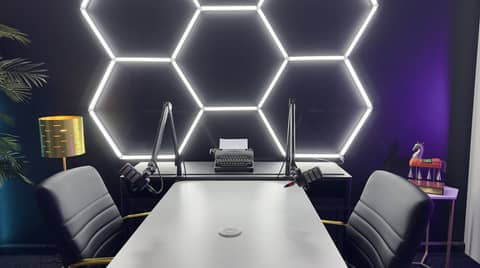
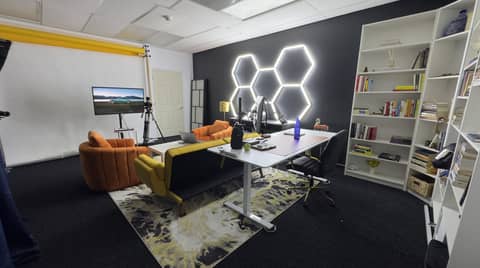
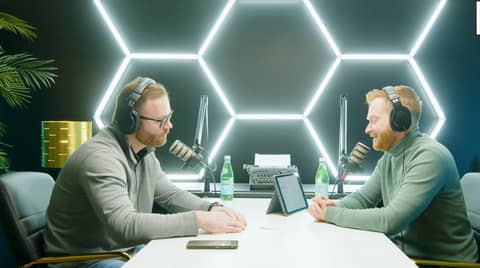
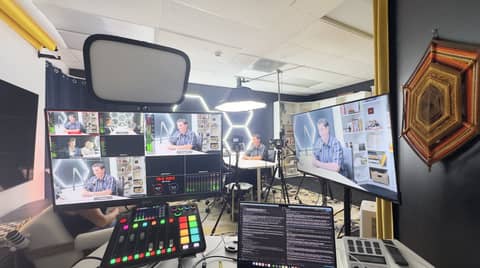
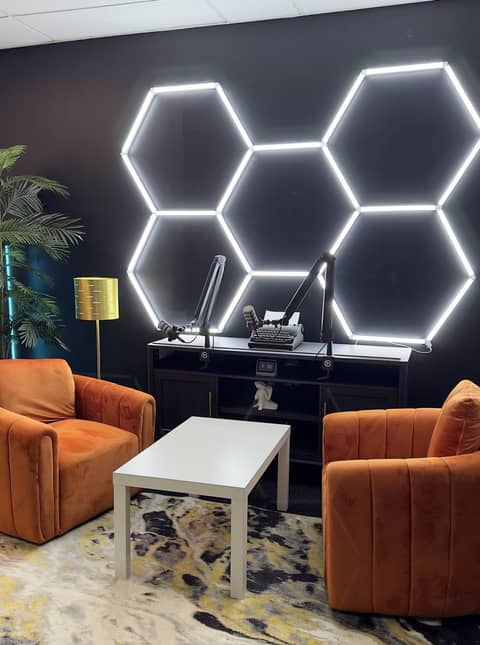
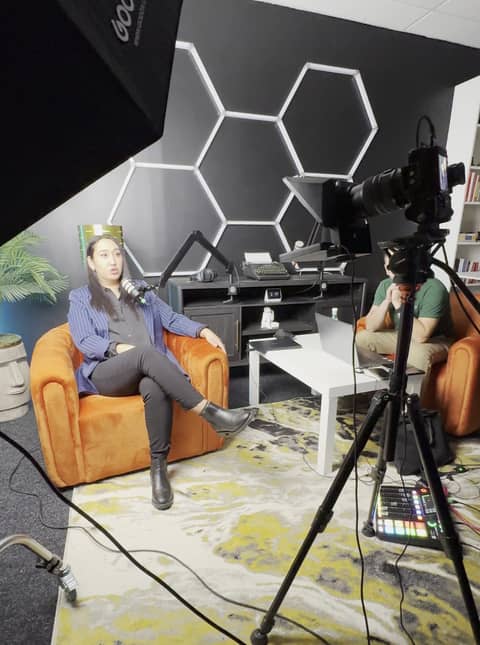
Studio time at Kreate Vision Studio in Palatine, Illinois covers the room, the three 4K cameras, the audio, an on-site engineer running the session, a live multi-camera cut delivered the same day, and every raw file including separate audio tracks. The podcast room is $250 an hour with a 90-minute minimum and the Content Session is $300 an hour with a two-hour minimum. What is not included is everything after the live cut: a produced edit, short-form clips, captions and transcripts, distribution setup, and full episode production. Those are quoted per project rather than billed by the hour.
The line is the live cut
Everything up to and including the live multi-camera cut is in the hourly rate. Everything after it is quoted.
That single sentence answers most of the pricing questions people arrive with, and it is worth saying plainly because the industry generally does not. Plenty of studios advertise an hourly rate and then meter the things you assumed came with it.
What the hourly rate covers
| Podcast room | Content Session | |
|---|---|---|
| Rate | $250/hr | $300/hr |
| Minimum | 90 min, so $375 | 2 hours, so $600 |
| The room | Yes, one of five sets | Yes |
| Cameras | Three 4K | Full equipment range |
| Audio | Mic per person, separate tracks | Yes |
| Someone running it | On-site engineer | Operator |
| Live multi-camera cut | Yes, same day | Not applicable |
| Raw files | Every angle, separate audio | All raw files |
Both include a person whose entire job during your booking is the recording. When you compare rates between studios, that is the line worth checking first, because a room you operate yourself is a different product rather than a cheaper version of this one. That is the part worth paying attention to when comparing rates, because a cheaper room where you operate the gear yourself is a different product, not a discount on this one.
What the engineer inside that rate actually does for the 90 minutes is in what the on-site engineer does during your session.
What you walk out with
Three things, and you get all of them:
- The live cut. The engineer switches between the three angles while you talk, so the multi-camera edit is essentially finished when the conversation is. For a lot of shows this is publishable as it stands.
- Every camera angle, raw. Not just the cut. If you or an editor want to re-cut the episode a different way in six months, the material is there.
- Separate raw audio tracks. One track per microphone. This is the file that saves an episode. If one person’s audio has a problem, it can be fixed without touching anybody else’s.
Nothing is withheld pending a further payment. You booked the room and the recording is yours.
The separate audio tracks are the part of that delivery that decides whether an episode can be fixed later; see why separate audio tracks matter.
What is quoted separately
Everything that turns a recording into a published show:
- A produced edit. Graphics, music, tightened pacing, colour. Different work from a live cut and priced per project because the scope varies.
- Short-form clips. The vertical cutdowns that actually distribute an episode. Real editorial work, not a byproduct.
- Captions and transcripts. Needed for accessibility and for search, and increasingly for being quoted by AI answer engines, which read transcripts rather than watching video.
- Distribution setup. A one-time job people assume is included in something: hosting, the RSS feed, artwork at the right sizes, and getting accepted by the directories.
- Full episode production, where the studio takes the whole thing from booking to published.
Current prices for these are on the pricing page. They are quoted rather than bookable online because the right answer depends on the show.
The question to ask any studio
Not “what is your hourly rate.” Ask: what do I walk out with, and what do I pay for after that.
Two studios quoting the same rate can differ by hundreds of dollars per episode once you find out that one of them charges for the multicam edit, or delivers only a stereo mix rather than separate tracks, or holds the raw files.
The rest of the rate card
What it actually costs to record a podcast has the block table. What to do with the footage afterwards covers which of the post-production services are worth buying and in what order.
Asking before you book
Book through Square Appointments, or call (224) 328-2853 to talk through what a finished episode needs before committing to any of it.
What do I actually walk out with after a session?
A live multi-camera cut, finished by the time you stand up, plus every raw file: each camera angle and separate raw audio tracks for each microphone. Nothing is held back pending a further payment.
Is the engineer included or extra?
Included. An on-site engineer runs cameras and audio on every podcast booking. That is not an add-on and it is not optional, because it is the thing that makes a live cut possible.
Do I get the raw files or only the finished cut?
Both. The raw files matter more than people expect. Separate audio tracks per person mean a problem on one microphone can be fixed without touching anyone else's audio, and separate camera angles mean somebody can re-cut the episode differently later.
What is not included?
Anything after the live cut. A more produced edit with graphics and music, short-form clip packages, captions and transcripts, distribution setup, and full episode production are all quoted separately.
Why is post-production quoted rather than priced by the hour?
Because the work varies enormously by show. A tightly produced episode with music, graphics and heavy pacing edits is a different job from a light clean-up, and charging both at the same hourly rate would mean one of them is wrong.