What to Bring to Your First Studio Session
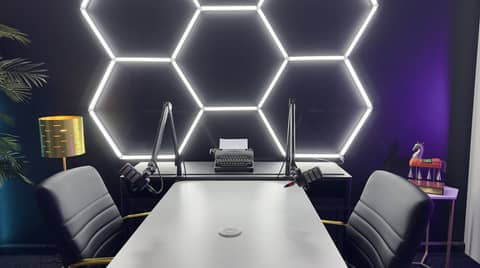
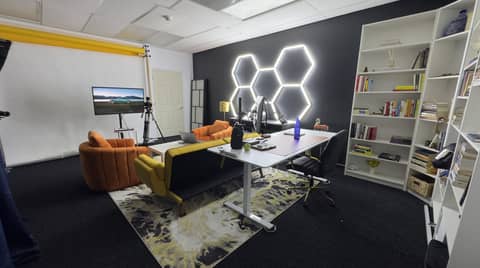
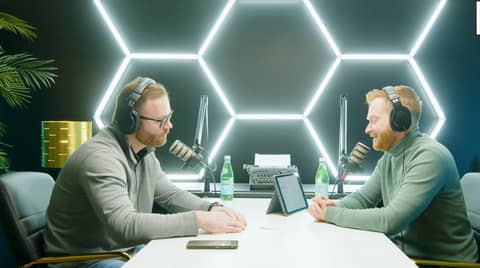
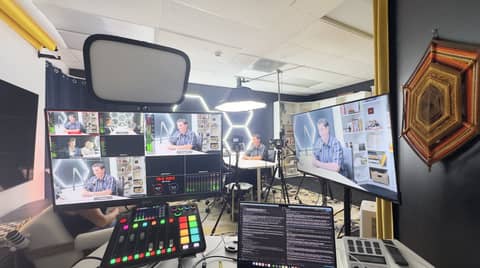
Before a first session at Kreate Vision Studio in Palatine, Illinois, decide four things: the episode's one question, the running order, who is speaking, and what happens to the recording afterwards. Bring a written running order, water, and a change of shirt if you are recording more than one episode. Arrive fifteen minutes early. Everything technical is in the room, including three 4K cameras, a microphone per person and an on-site engineer, so nothing needs to be brought, tested or set up by you.
Almost all of it is decided before anyone arrives
The technical side of a session is handled. Three cameras, a microphone per person, an engineer running it. Nothing about the equipment is your problem and nothing needs to be brought. That is the difference between a studio and a room with gear in it.
What determines whether the session goes well is a set of decisions that cost nothing and take about twenty minutes, and that most people skip.
Decide these four things
One: the one question the episode answers. Not the topic. The question. “Marketing” is a topic. “Why do good contractors get outbid by worse ones” is a question. If you cannot write the question in a sentence, the episode will wander and you will hear it in the edit.
Two: the running order. Not a script. A running order: your opening line, the three or four things you want to reach, and how you intend to end. Write the opening line out properly, because it is the hardest thing to invent while a camera is pointed at you and it is the part that decides whether anyone stays.
Three: who is speaking. If there are three of you, decide in advance who leads. Rooms with two hosts who both think they are leading produce recordings where nobody hands off and everybody talks over the good bits.
Four: what happens to it afterwards. Decide before you record whether this is going out as the live cut, going to an editor, or being cut into short-form clips. It changes how you record. If clips are the plan, you deliberately make self-contained points instead of building one long argument that cannot be excerpted.
What to bring
- The running order, on paper or on a phone that is in aeroplane mode.
- Water. Talking for an hour is more physical than people expect.
- A change of shirt, if you are recording more than one episode. Otherwise six episodes released over six weeks all look like the same afternoon, because they were.
- Anything you are going to hold up. Products, a book, a printed chart.
That is the list. What the room already has is on the studio page.
What to leave
- Your own microphone. There is one per person and they are matched to the room.
- A laptop for notes, unless you genuinely need it. Laptop fans are audible, screens light faces from below, and reading from a screen is visible in the eyes.
- A watch that beeps, and a phone that is merely on silent. Silent still vibrates and a vibrating phone on a table is picked up by a microphone. Aeroplane mode or in a coat.
The first ten minutes
Expect to feel strange. Nearly everyone we record does, and the first take of an opening usually gets re-recorded. It is budgeted into the session rather than being a problem.
A trick that works: start with something you have said a hundred times. Explain what you do, to a stranger. By the time you have got through that, you have stopped performing and started talking, and that is when the actual recording should begin.
What the engineer is doing in those minutes, and for the rest of the booking, is in what the on-site engineer does during your session.
If you have a guest
Send them the themes, not the questions. This is counter-intuitive and it matters. A guest who has rehearsed exact answers delivers rehearsed answers, and they sound like it. A guest who knows the territory arrives relaxed and thinks on camera, which is the thing worth recording.
Tell them what to wear, where to park, and how long it will take. Guest anxiety is almost always logistical rather than editorial, and it shows up as stiffness in the first fifteen minutes.
Before you arrive
How long should you book covers picking a session length. How many people should be in the room covers format and capacity.
Booking
The studio is at 800 E Northwest Hwy Ste 90 in Palatine, open daily from 9am to 8pm. Book through Square Appointments, or call (224) 328-2853 to talk a format through first.
What should I bring to a podcast studio session?
A written running order, water, and a change of shirt if you are recording more than one episode in the visit. Everything technical is already in the room.
How early should I arrive?
Fifteen minutes. That covers coats, water, sitting down, microphone placement and a level check, none of which you want to be doing while the first take is already running.
Do I need a script?
Not a word-for-word script, and it usually hurts if you have one. What you need is a running order: the opening line, the three or four things you want to get to, and how you intend to end.
What if I have never been recorded before?
It is normal for the first ten minutes to feel strange and for the first take of the opening to be re-recorded. Both are budgeted into the session and neither is a problem.
Should I send questions to my guest in advance?
Send the themes, not the questions. Guests who have rehearsed exact answers sound rehearsed. Guests who know roughly where the conversation is going are relaxed, which is what you actually want.