What a content creation studio is, and what to check first
A content creation studio is a room built for short-form and brand video, with sets, lighting and cameras already up, usually rented by the hour and sometimes staffed by an operator. A search turns up three kinds: self-serve rental, an operated studio, or a full production company billed per project. At Kreate Vision Studio in Palatine, Illinois, the operated version is the Content Session, $300 per hour with a two-hour minimum, so $600 to start, up to $2,200 for eight hours.
A content creation studio is a room built for short-form and brand video: sets built, lighting set, cameras already up, usually rented by the hour. Some come staffed with an operator who runs the gear while you perform. Others hand you the room and let you run it yourself, which is a very different booking at a very different price.
What a content creation studio is
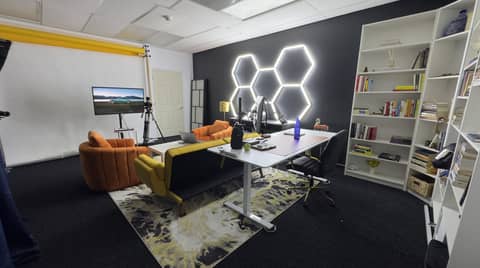
A content creation studio is a room with sets, lighting and cameras already set up, rented by the hour for short-form and brand video, sometimes with an operator included. The category covers any room set up in advance for video, so you are not building a set from scratch every time you need footage. That means backdrops or sets already dressed, lighting already positioned and balanced, and cameras already mounted rather than carried in.
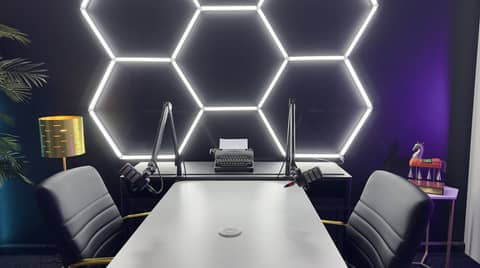
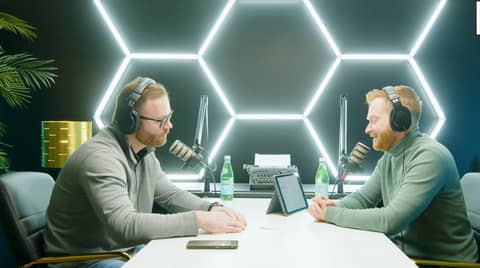
That is different from a podcast studio, which is built around people talking at a table on camera rather than around whatever you are shooting that day. The two sometimes share a room and sometimes do not.
What it is not: an empty room with nothing built into it. If there is no lighting up, no camera mounted and no set dressed, that is a meeting room or an event space, not a content studio, whatever the listing calls it. Most people typing “content creation studio near me” are not researching the category; they want a room they can get to this week, so proximity and availability tend to matter more than the label on the door.
The three kinds you will meet when you search
Search “content creation studio near me,” “content creator space near me,” or “content house near me” and three different kinds of business answer, priced and staffed differently.
Self-serve rental rooms. You book the room and the equipment and run all of it yourself: your camera, your lights, your own tripod or theirs. Cheapest per hour of the three. Fits someone who already knows how to shoot and edit and just wants a consistent, controlled space.
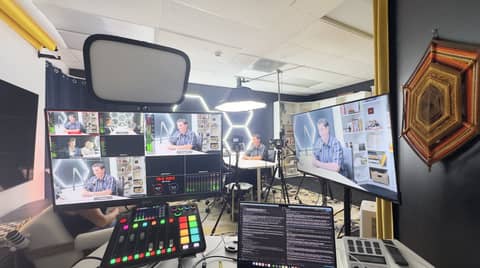
Operated studios. An operator or engineer runs the cameras, lights and audio while you perform. You are not troubleshooting a light stand between takes; you are on camera the whole time. Costs more per hour than self-serve, less than a full crew.
Full production companies. A crew comes to you, or you go to them, quoted per project rather than per hour. The right fit for a single high-stakes shoot, a commercial, or anything that needs a director and a script rather than a room booked repeatedly.
Six things to check before you book
1. Is an operator included, or is it self-serve. The single biggest driver of both price and outcome. Self-serve means you set exposure, focus and the key light yourself, and if a light stand fails at minute forty the clock keeps running while you fix it. If you have never run a camera and lighting kit together, self-serve is a harder first booking than the low hourly rate suggests.
2. What you leave with, and when. Raw files only, a live cut handed over the same day, or a fully produced edit are three different products at three different price points. Ask before you book, not at checkout. What is included and what costs extra draws that line for this studio, and what to do with the footage covers the step after you have it.
3. How many sets, and whether they read as different places on camera. One backdrop shot six times looks like one afternoon, and a feed full of the same wall says so. Several sets, or one set with real range in it, let a batch not look like a batch. Ask to see photos of each set lit, not the floor plan.
4. The minimum booking, and what a two-hour block actually yields. A short block sounds efficient until setup and a change of clothes eat into it. Ask what a first-timer typically finishes inside the minimum, not what is theoretically possible. How long to book goes deeper on sizing a session, and what recording a podcast costs has the full rate card for the podcast room.
5. Audio: a real mic setup with separate tracks, or a camera mic. Studios built around the picture treat sound as an afterthought more often than they should. A camera mic picks up the room; a dedicated mic picks up you. Separate tracked audio is worth asking about directly, even for a booking that reads as “video,” because a viewer forgives soft focus long before bad sound.
6. The practical: the address, the capacity, what to bring. Where you are actually driving to, how many people the room holds, and what is expected of you before you arrive: props, wardrobe, a shot list. Arriving with the products still in the car and no list is the most common way to lose the first thirty minutes of paid time.
How the three kinds compare
The same six checks, answered for each kind. Use the table to work out which column you are actually shopping in before comparing hourly rates.
| Check | Self-serve rental | Operated studio | Full production company |
|---|---|---|---|
| Who runs the gear | You | The operator, while you stay on camera | A crew with a director |
| Who fixes a failed light mid-shoot | You, on your clock | The operator, on theirs | The crew |
| Who owns the footage | You, whatever you exported | You, as raw files handed over | Whatever the contract says; ask |
| Notice needed | Often same week, booked online | Days, booked online | Weeks, with a quote first |
| What arrives afterwards | Nothing beyond what you copied off the card | Raw files after the session | A produced piece on a project timeline |
| Priced by | The hour | The hour | The project |
What a Content Session costs
At Kreate Vision Studio, the operated version of this is the Content Session: full equipment, an operator, and all raw files, at $300 per hour with a two-hour minimum. Full rates for both bookings are on the pricing page.
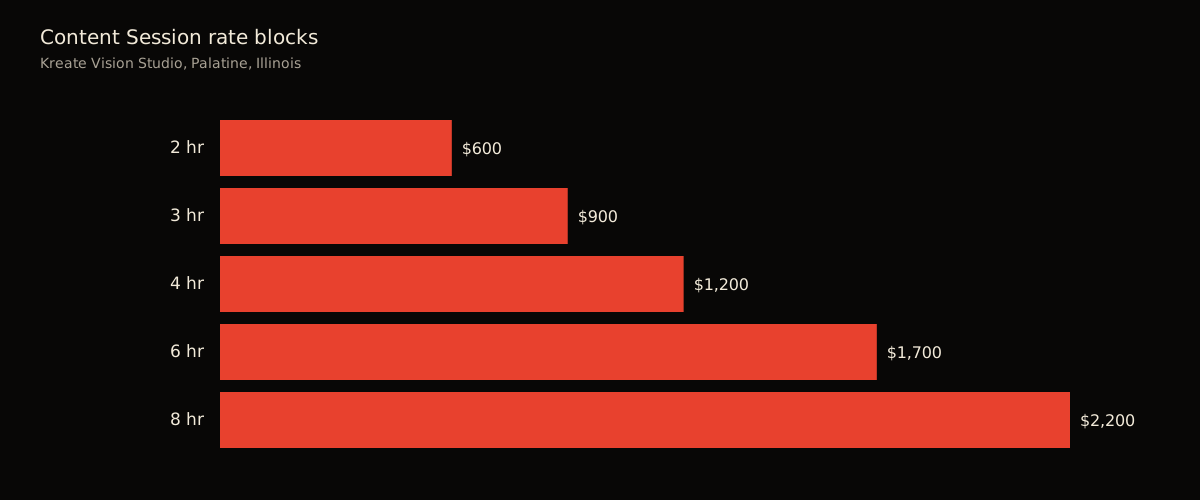
Two hours is the floor, at $600. A single afternoon at six hours is $1,700, which works out cheaper per hour than the two-hour minimum.
What a two-hour block actually yields
Short-form has a ceiling that shapes the plan. YouTube describes Shorts as vertical videos up to 3 minutes long, made for the phone screen (YouTube Help, read 2026-09-04). Most pieces a business publishes land far shorter than that, 30 to 90 seconds finished, because the first sentence has to earn the second.
A finished 60-second piece is not 60 seconds of studio time. Count the reset between pieces, a second take of the opening line, a wardrobe change every few pieces, and a minute to check the last take before moving on. We plan on roughly ten to fifteen minutes per finished short piece for a first-timer with a written script. That puts a two-hour block at six to eight pieces, and a six-hour block near twenty, with the second half of the day moving faster than the first. That is our planning rule, not a measured average; the variable that moves it most is whether every piece was scripted before the booking.
What a longer block produces, in finished pieces rather than dollars, is covered in what a content day is, the batching version of this same booking.
What this looks like at Kreate Vision Studio
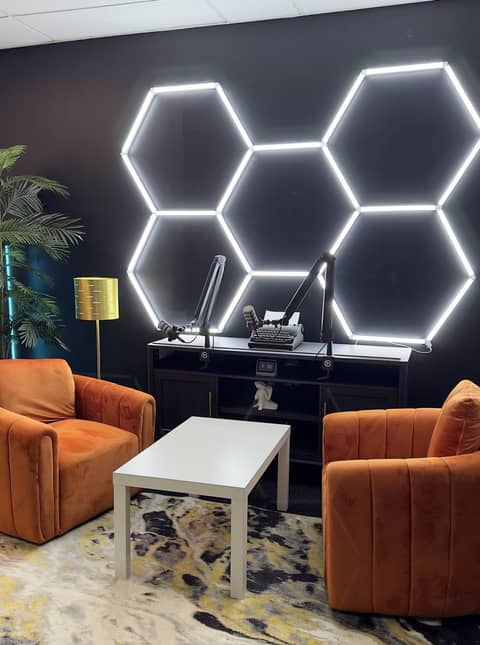
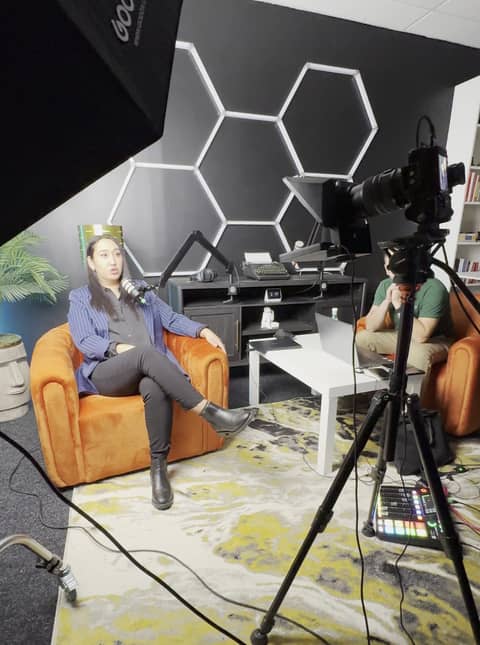
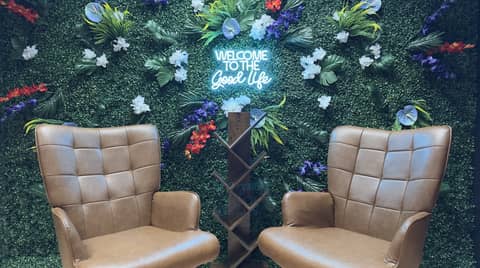
Kreate Vision Studio, at 800 E Northwest Hwy Ste 90 in Palatine, Illinois, runs the operated version described above: a Content Session at $300 per hour, two-hour minimum, with an operator running the full equipment range and every raw file handed over afterwards. Five sets are in the room; choosing a set covers which one fits a given shoot, and photos of the room are on the studio page. Room capacity depends on the set and what you are shooting; the podcast room’s specific capacity is covered in how many people fit in a podcast studio.
If audio, not video, is what actually matters for what you are recording, the podcast room runs a dedicated on-site engineer and separate tracked audio instead. What that role covers is in what the engineer does in your session. There is no separate crew that travels; you come to the room.
A 15-minute studio tour is bookable online if you want to see the sets before committing to a block. Otherwise, book a Content Session directly, or call (224) 328-2853 to talk through which block fits before you commit to one. First time in the room, what to bring covers the practical side.
Sources
- YouTube Help, “Get started creating YouTube Shorts” (Shorts are up to 3 minutes long), read 2026-09-04
- Kreate Vision Studio rate card, Square Appointments, read 2026-08-24
What is a content creation studio?
A room built for short-form and brand video, with sets, lighting and cameras already set up, usually rented by the hour. Some, like the Content Session at Kreate Vision Studio in Palatine, Illinois, include an operator running the gear while you perform. Others hand you the room and equipment and let you run it yourself.
What is the difference between a self-serve studio and an operated studio?
In a self-serve room you run your own camera, lights and audio for a lower hourly rate. In an operated studio, someone runs the equipment while you perform, which costs more per hour but removes the technical work. Kreate Vision Studio's Content Session is the operated version, $300 per hour with a two-hour minimum.
How long should I book for a first content creation session?
Two hours is usually the shortest block a studio will sell, and it is tighter than it sounds once setup and a wardrobe change are counted. At Kreate Vision Studio the two-hour minimum for a Content Session is $600; a six-hour block works out cheaper per hour, at $1,700, if there is enough scripted material to fill it.
Is a 'content house' the same thing as a content creation studio?
Not usually. A content house more often means a group of creators living and filming together, not a room you rent. If that search brought you here looking for a space to book by the hour, a content creation studio is the category, and at Kreate Vision Studio in Palatine that booking is the Content Session.
Is a content creation studio the same as a podcast studio?
No. A podcast studio is set up for people talking at a table, with multiple cameras aimed at the seats. A content creation studio is set up for whatever you are shooting: product, brand, social or personal video. Kreate Vision Studio offers both, as separate bookings at separate rates.