The Four Things You Need to Start a Video Podcast
To start a video podcast you need four things, in this order: a format you can repeat without running out of structure, a room with controlled sound and light, a microphone and camera per person, and somewhere to publish. Audio matters more than image quality, and multiple camera angles have to exist at recording time because they cannot be added later. Kreate Vision Studio in Palatine, Illinois covers the room, the three cameras and the engineer from $375 for a 90-minute session, so the host only hosts.
The gear question is the last one, not the first
Most guides to starting a video podcast are gear lists, generally written by somebody who sells gear. Gear is the easiest problem here and the one most people solve first, which is why plenty of shows have four good microphones and three episodes.
The decisions that determine whether the show survives happen before anything is bought. There are four things you actually need, and only one of them is equipment:
- A format you can repeat without running out of structure.
- A room with controlled sound and light.
- A microphone and a camera per person, recorded to separate tracks.
- Somewhere to publish.
The rest of this is what each of those means in practice.
Decide the format before you buy anything
A format is not a topic. It is the answer to: who is in the room, how long is an episode, how often does one come out, and what does a listener get from it that they cannot get faster somewhere else.
The practical test is whether you could record six episodes of it back to back without running out of structure. Interview shows pass that test easily, which is why so many exist. Solo shows pass it only if you are prolific. A show that depends on a guest of a specific calibre every week does not pass it, and that is usually what kills a podcast around episode five.
Decide this first because it determines everything downstream, including how many chairs and cameras you need and whether a studio is worth booking at all.
The technical order of operations
This is requirement two and three from the list above, broken down. Ranked by how much each one affects whether somebody keeps watching, which is close to the reverse of the order people buy in:
- Sound. People will watch a slightly soft image for an hour. They will not tolerate room echo, uneven levels between speakers, or air-conditioning hum for ninety seconds. A microphone per person, recorded to a separate track, is not a luxury, it is the difference between a fixable recording and a ruined one.
- The room. A hard, empty room sounds bad no matter what microphone is in it. This is the part you cannot fix in post and the single most common reason home setups sound amateur.
- Light on faces. Consistent, soft, from the front. Overhead office lighting is the reason most self-shot video looks tired, and it costs nothing to fix once you know.
- More than one camera angle. One locked-off frame means one frame for the whole episode. Every cut you might want later, every reaction shot, every vertical clip pulled from a single speaker, depends on having had a second and third angle at the time. You cannot add this afterwards.
- The camera itself. Genuinely last. Modern cameras are all good enough. This is the thing people research for weeks and it matters least.
What a studio replaces
Booking a room is a decision about who does the work, not about quality alone. What you stop doing:
- Buying, maintaining, updating and storing cameras, lights and microphones
- Learning to operate all of it well enough that a bad take is not discovered afterwards
- Treating a room acoustically, or accepting that yours is not treated
- Running the recording while also hosting the conversation
- Doing the multi-camera edit
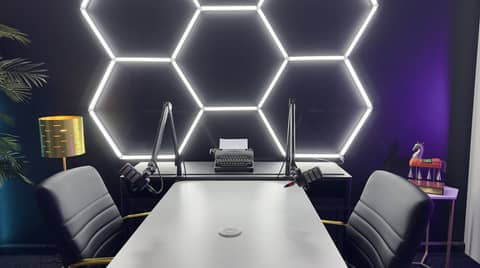
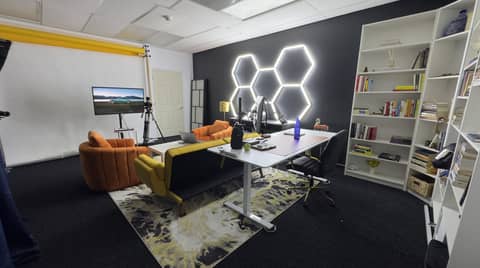
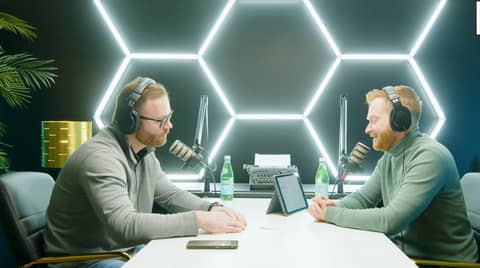
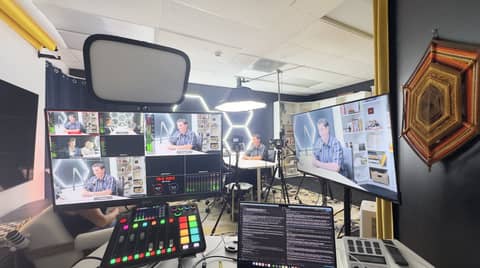
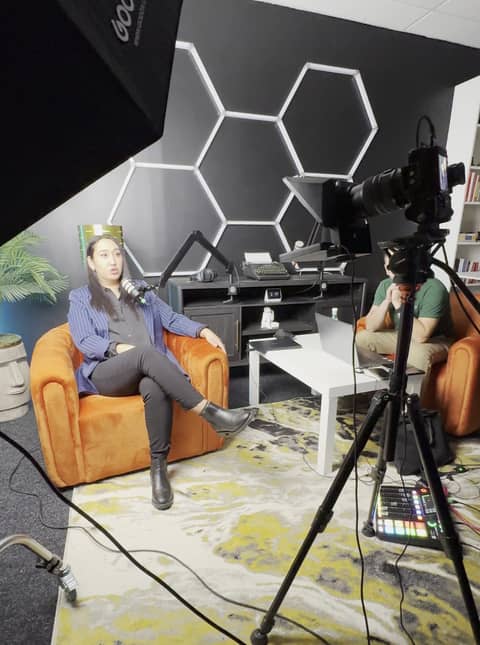
At Kreate Vision Studio in Palatine the room is set with three 4K cameras and an engineer runs the session, which means the person hosting only hosts. Rated 5.0 on Google, open seven days. The live multi-camera cut is finished by the time you stand up, and you leave with that cut plus every raw file and separate audio tracks.
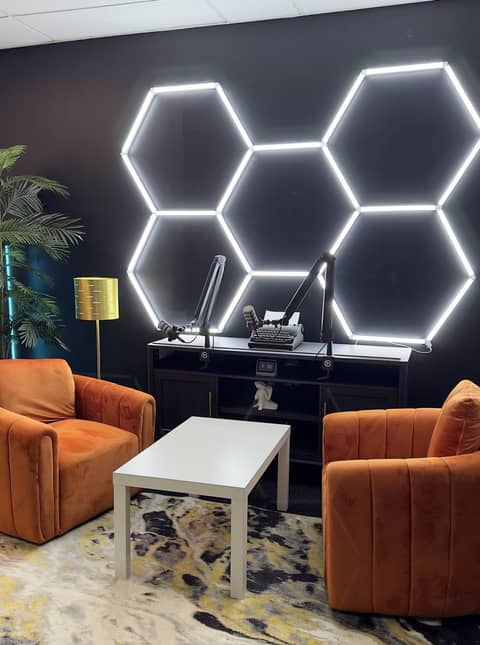
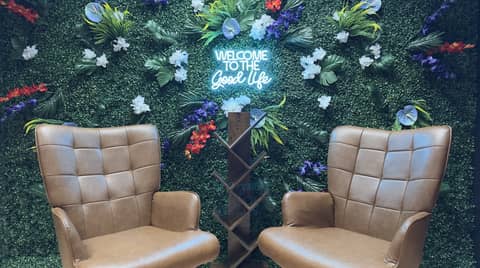
The table seats four, a host plus up to three guests, and the room takes five including the engineer. There are five sets, so the show does not have to look like every other show recorded in the same building. The room itself is the fuller version of that list.
If the show needs more than one camera, why a video podcast is shot on three cameras explains the setup. If your guests are not local, remote recording or the studio covers when a call is enough.
What you can safely skip at the start
- A custom intro animation. Nobody has ever subscribed because of one.
- A second host you do not need. Two people who both have to be free to record is more than twice as hard to schedule as one.
- Buying gear before recording anything. Record two episodes on your phone and a borrowed microphone. If you still want to make the third, then spend money.
- A website for the podcast. The directories and a page on your existing site will do until the show has an audience worth building for.
What the first session should look like
Book more time than one episode needs. The first twenty minutes of a first session go on settling in, finding the level of the conversation, and adjusting to being recorded. If you book the exact length of one episode, that twenty minutes comes out of the episode.
A 90-minute block gives you the settling-in period and real material. If the format works, record several in one visit. Batching is the single biggest reason some shows publish for two years and others stop in March.
Where to go from here
What it actually costs to record a podcast has the real numbers. If the answer is that you do not need a room yet, studio or your own office covers when your own desk is genuinely the better call.
When you are ready for a room
There is no rush to book one. When the show exists and the format holds, a 90-minute block is $375 and books through Square Appointments. The studio is at 800 E Northwest Hwy Ste 90 in Palatine, open daily 9am to 8pm.
What do I need to start a video podcast?
Four things, in this order: a format you can repeat, a recording space with controlled audio and light, a camera and microphone per person, and somewhere to publish. Gear is the easiest of the four to solve and the one people spend the most time on.
Do I need more than one camera for a video podcast?
Not to start, but a single locked-off camera limits the edit to one frame for the whole episode. Multiple angles give you cutaways, which is what makes a long conversation watchable and what makes short-form clips possible afterwards.
Is audio or video more important for a video podcast?
Audio. Viewers forgive a soft-looking image and leave immediately over bad sound. If you are choosing where to spend, spend on microphones and on a room that is not echoing before you spend on cameras.
What does booking a studio replace?
It replaces buying and maintaining cameras, lights and microphones, learning to operate them, treating a room for sound, and doing the multi-camera edit yourself. At Kreate Vision Studio the engineer runs the session and the live multi-camera cut is finished when you stand up.
How long should the first recording session be?
Long enough to record more than one episode. The first 20 minutes of any first session are spent settling in, so a 90-minute minimum block gives you that plus real material.